

Now Reading: “Aurangabad and Ahmednagar Must Retain Their Historical Identity,” Says All India Peace Mission President Daya Singh
-
01
“Aurangabad and Ahmednagar Must Retain Their Historical Identity,” Says All India Peace Mission President Daya Singh
“Aurangabad and Ahmednagar Must Retain Their Historical Identity,” Says All India Peace Mission President Daya Singh


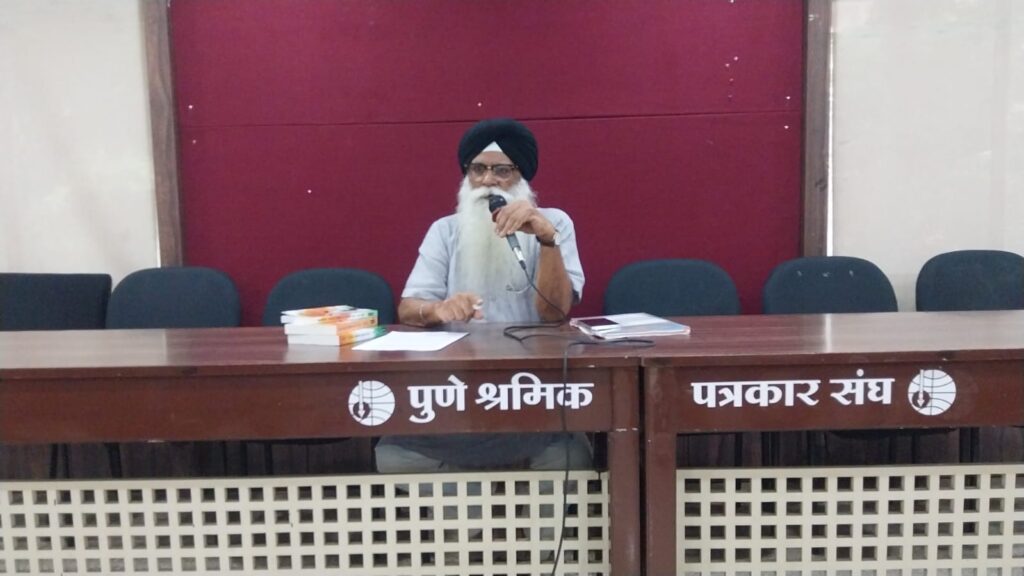
Pune, June 11 – The recent renaming of Aurangabad to Chhatrapati Sambhaji Nagar and Ahmednagar to Ahilyabai Nagar has sparked fresh debate across historical and religious circles. Speaking at a press conference, All India Peace Mission’s National President Daya Singh urged the Maharashtra government to preserve the original names of these cities when discussing historical contexts, especially concerning the Sikh faith and its deep-rooted connections to these regions.
“Erasing Mughal Names Should Not Mean Erasing Sikh History”
Daya Singh, who recently visited Aurangabad for a community event, expressed concern that the ongoing attempt to erase Mughal-era names might unintentionally lead to the erasure of significant Sikh history attached to these places.
“While renaming cities is a matter of governance and sentiment, it is crucial not to overlook the historical truth. Aurangabad and Ahmednagar have deep Sikh connections, and forgetting that would be a disservice to both Sikh heritage and Indian history,” he said.
A Gurudwara Linked to the ‘Panj Pyare’
During his visit, Singh interacted with locals and visited a Gurudwara in Aurangabad that is directly associated with Bhai Daya Singh and Bhai Dharam Singh, two of the ‘Panj Pyare’ – the five beloved ones handpicked by Guru Gobind Singh to lead the Khalsa order.
“This place is not just a spiritual center; it’s a living piece of history,” Singh said. “It was from Dina Kangar in Punjab that Guru Gobind Singh sent his powerful letter, the ‘Zafarnama’ or ‘Letter of Victory,’ to Emperor Aurangzeb, who was then stationed in Aurangabad. The letter, carried by Bhai Daya Singh and Bhai Dharam Singh, detailed the injustices faced by the Guru’s family and raised questions about the moral foundations of Aurangzeb’s rule.”

Zafarnama: A Turning Point in History
Daya Singh recounted the letter’s historical context: “The Zafarnama mentioned how Guru Gobind Singh’s two elder sons were martyred at Chamkaur, while the two younger sons and their mother were executed at Sirhind by the Mughal governor. The Guru questioned if this brutality reflected the true essence of Islam.”
When the letter reached Aurangzeb in Aurangabad, he was deeply affected by its contents. “The emotional and factual intensity of the Zafarnama was so powerful that it reportedly brought shame and regret to Aurangzeb, and he passed away shortly afterward,” Singh explained.
Ahmednagar’s Role in the Same Chapter
While Aurangzeb received the letter in Aurangabad, his army was encamped in Ahmednagar, making both cities vital parts of the Sikh-Mughal narrative. Singh stressed that these facts underline the spiritual, emotional, and historical significance of the two cities for the Sikh community.
“This history is rarely taught in schools or featured in textbooks. That’s why there is a genuine fear that in the process of politically correcting the past, we may lose sight of other crucial narratives,” Singh said.
Appeal to Maharashtra Government
Daya Singh urged the Maharashtra government to establish a dedicated department for preserving historical and religious heritage.
“As a Sikh and as an Indian, it’s disturbing to see vital stories being sidelined. The state needs a research body that actively documents, preserves, and educates future generations about such important historical linkages,” he suggested.
He added that Prime Minister Narendra Modi has often expressed solidarity and respect toward the Sikh community, but emphasized that these sentiments must also be reflected in state-level historical narratives.
A Call for Balance in Historical Recognition
Singh clarified that his stance is not against renaming cities per se, but rather about retaining factual historical references in academic, cultural, and public discourse.
“When we talk about Sikh history and the events that unfolded in these cities, it is both appropriate and respectful to refer to them as Aurangabad and Ahmednagar—as they were known during those times,” he said. “You can give the cities new identities, but don’t erase the memory of what once happened there.”
Conclusion: Remembering All Facets of Indian History
As India continues to revisit its colonial and Mughal past, voices like Daya Singh’s remind us that history is layered and multi-dimensional. Efforts to decolonize narratives must ensure that religious and cultural truths are preserved—not erased.
Whether the cities are known as Chhatrapati Sambhaji Nagar or Ahilyabai Nagar, the events that unfolded in Aurangabad and Ahmednagar hold immense significance for the Sikh community and Indian history as a whole. The challenge ahead lies in balancing regional pride with historical integrity.
Related Posts



Stay Informed With the Latest & Most Important News


Advertisement

-
 01Sleep Science Shows Why Quality Matters More Than Duration
 -
 02Western Maharashtra’s Kirtankars Winning Hearts Through ‘Kon Honar Maharashtra Cha Ladka Kirtankar’
 -
 03Pune Man Duped of ₹1.35 Lakh in Online Dating Scam: A Cautionary Tale for Digital Romance Seekers
 -
 04Mantra Closes ₹1020 Cr Year with New Luxury Brand ‘Burgundy’, Redefines Urban Living in Pune
 -
 05Pregnant Woman Dies After Pune Hospital Denies Admission Over ₹10 Lakh Fee, Govt Orders Probe
 -
 06Pune’s ₹300 Crore Investment Scam: Absconding Couple Traced to Thailand, Police Launch Extradition Efforts
 -
 07Pune RTO Sets New Benchmark: Earns Record ₹59.36 Crore From Fancy Number Auctions in FY 2024-25